The Preliminary Budget sub-tab is used to create a quick project budget or a client preliminary budget proposal. Within this section, you can easily include a scope of work description and apply a margin or markup to both category and sub category levels.
Note: This is not a full Quantity Surveyor (QS) document or a final client estimate/quote.
This would be done via the quotes and estimate pages. Preliminary Budget serves as a quick budgeting tool for internal use or to give clients a general cost indication for the project.
To Learn how to create and manage your categories and sub categories from within Preliminary Budget read the help article here.
To Create a Preliminary budget manually without a CSV you can read the help article here.
To Find your Preliminary Budget Sub Tab you need to first find your project from the Project or Financial Tab along the top of your Rave page. Once in the project click the budget tab and then Preliminary Budget. If you dont see the Budget tab and/or the Preliminary Budget sub tab you will need to contact your branch owner or Rave Support to enable this permission.
Create a Preliminary Budget Via CSV import
Click the CSV Import button located at the top-right corner of the screen. The Upload CSV pop-up window will appear.
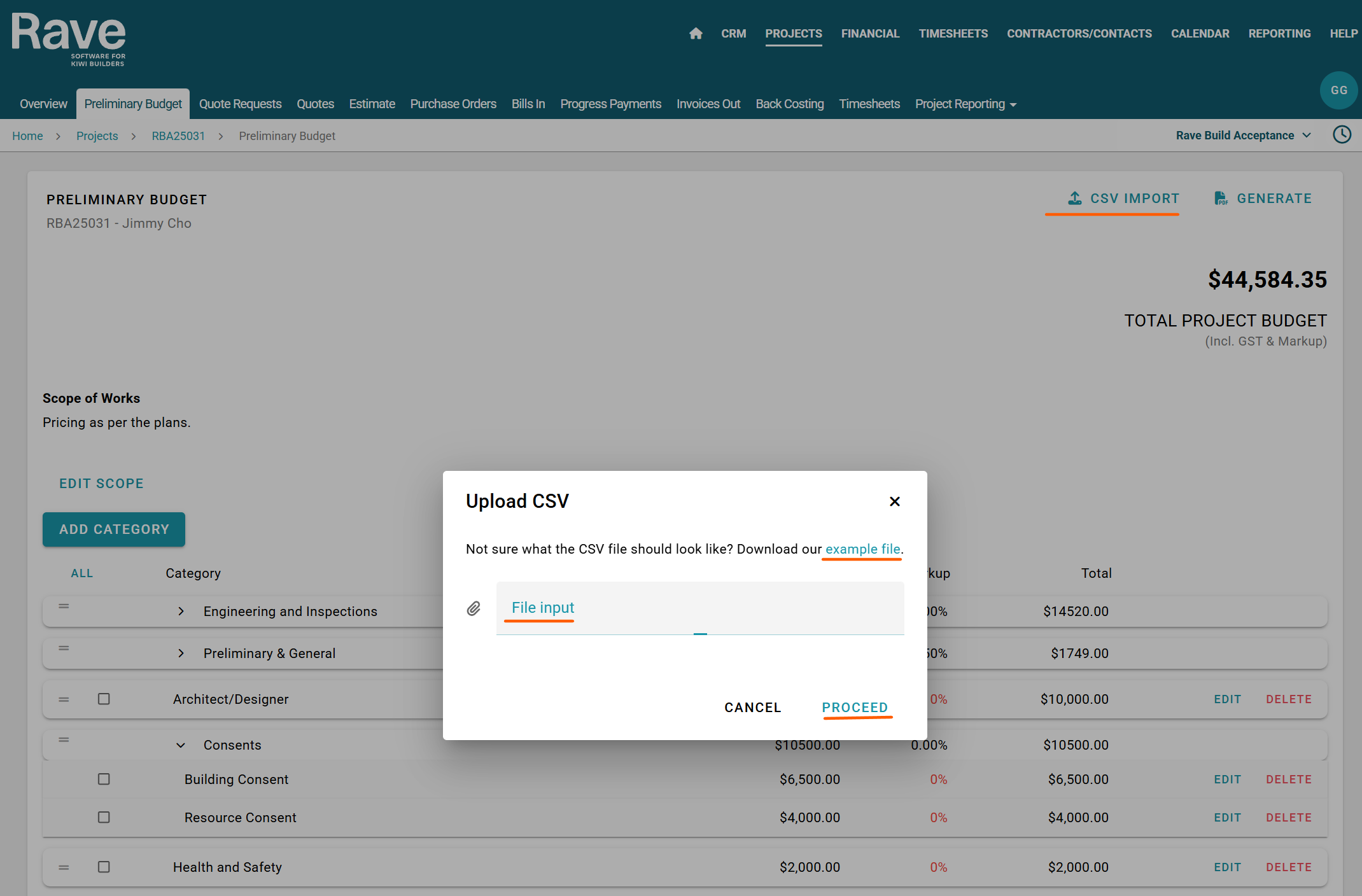
Before uploading, make sure your CSV file meets these requirements. Use the official Preliminary Budget CSV example file as your template. The file must include the headers
Category (Column A) mandatory
Sub Category (Column B) not mandatory
Price (Column C), mandatory
Scope of works (Column D) not mandatory
Note: To find a copy of the example file you can download it from the pop up screen by clicking on the blue example file link.
Each Category (Column A) and if in use Subcategory (Column B) must exactly match as per your names in Rave, spelling must match precisely.
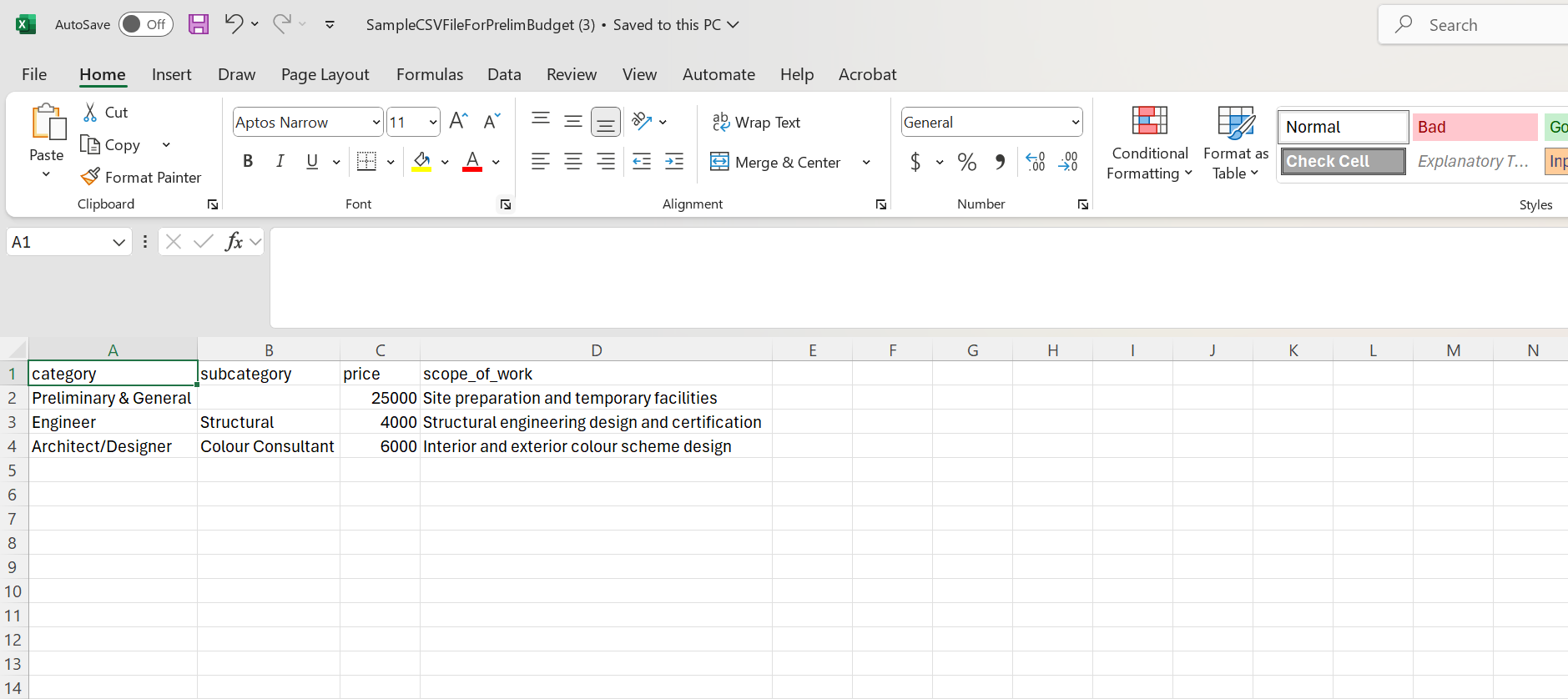
Enter the price values (Column B) as plain numbers. Do not include dollar signs ($).
Adding a scope of works where there is only a Category will assign the scope to the category header.
Where there is a Subcategory it will assign the scope to the sub category.
In the Upload CSV pop-up, click the cloud icon labeled “Click to select file(s) for upload, or drag and drop them here.” Select your prepared CSV file from your computer. Click Proceed to confirm and start the upload.
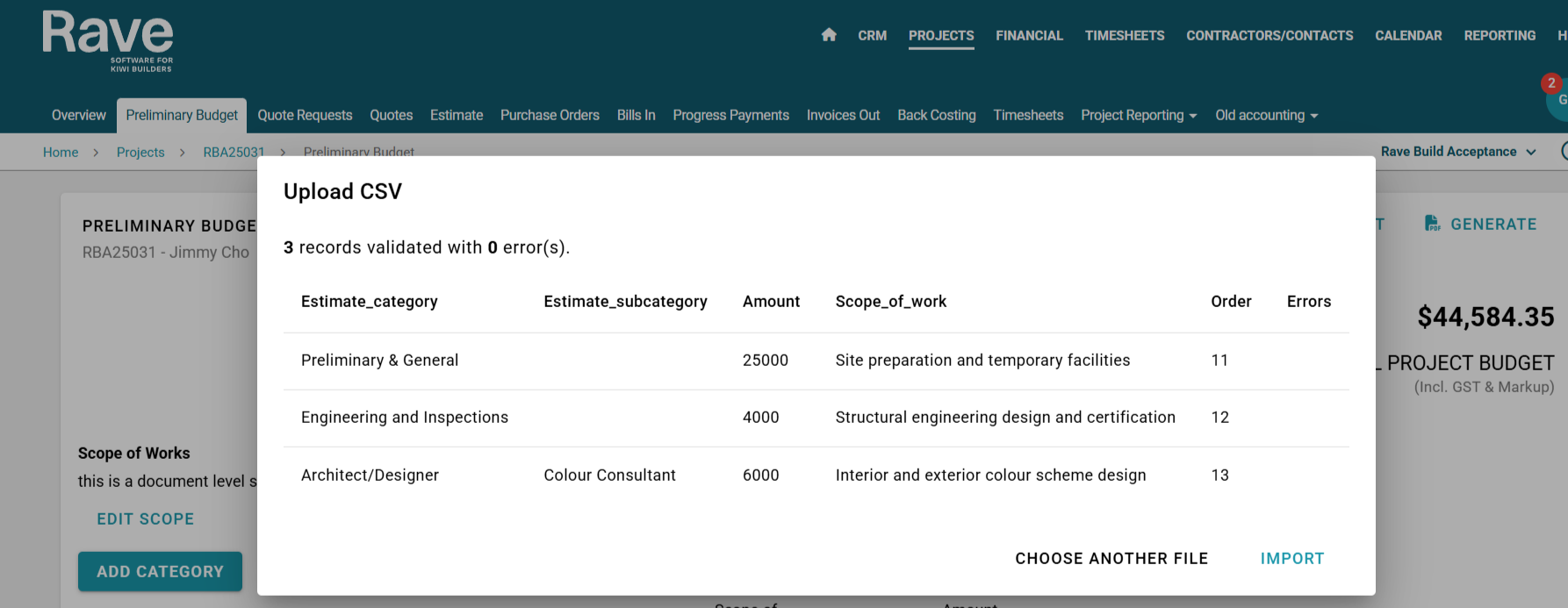
The system will automatically load all matching categories and their associated amounts into your Preliminary Budget. If there are no errors the import will look like the below and you can select Import to finish the process.
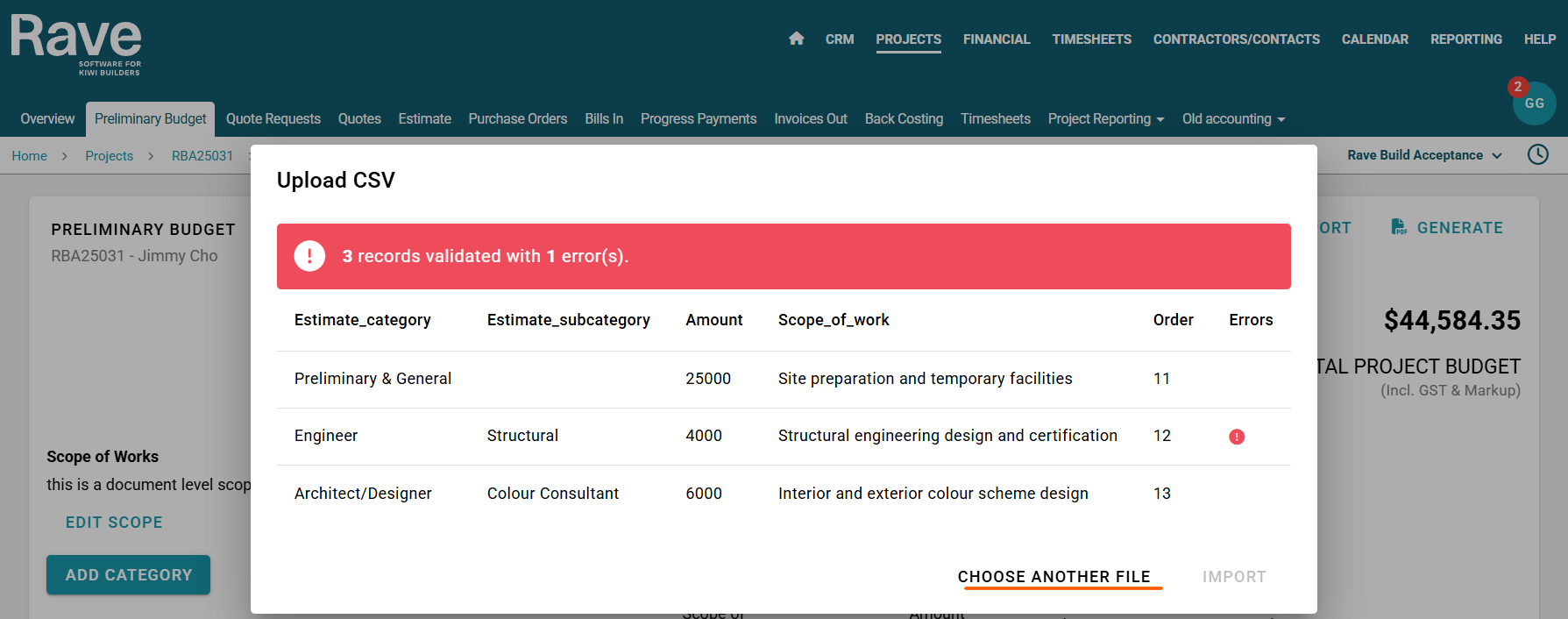
If any items cannot be added due to errors (because they don’t exist in your Estimate Category list, there are spelling issues etc) you’ll see a red alert message at the top of the import model.
Hovering over the red caution icon will tell you for each error what the problem is.
In this example the selected Category doesn't exist therefore it cannot be imported.
To fix this, manually add those missing categories and amounts to your Estimate Category list, or fix the spelling errors on the csv and then re-upload the file.
Once it imports with no errors you can press Proceed to save.
Once saved you'll see a table format with the same information as well as:
- Beside each line is the option to Edit or Delete.
- Also, it is possible to move the category lines up or down via the double bars to the left of each Category name.
- There is arrows to expand or collapse a category to view the sub category information underneath.
Deleting or Adding a Markup % to Multiple Category Lines
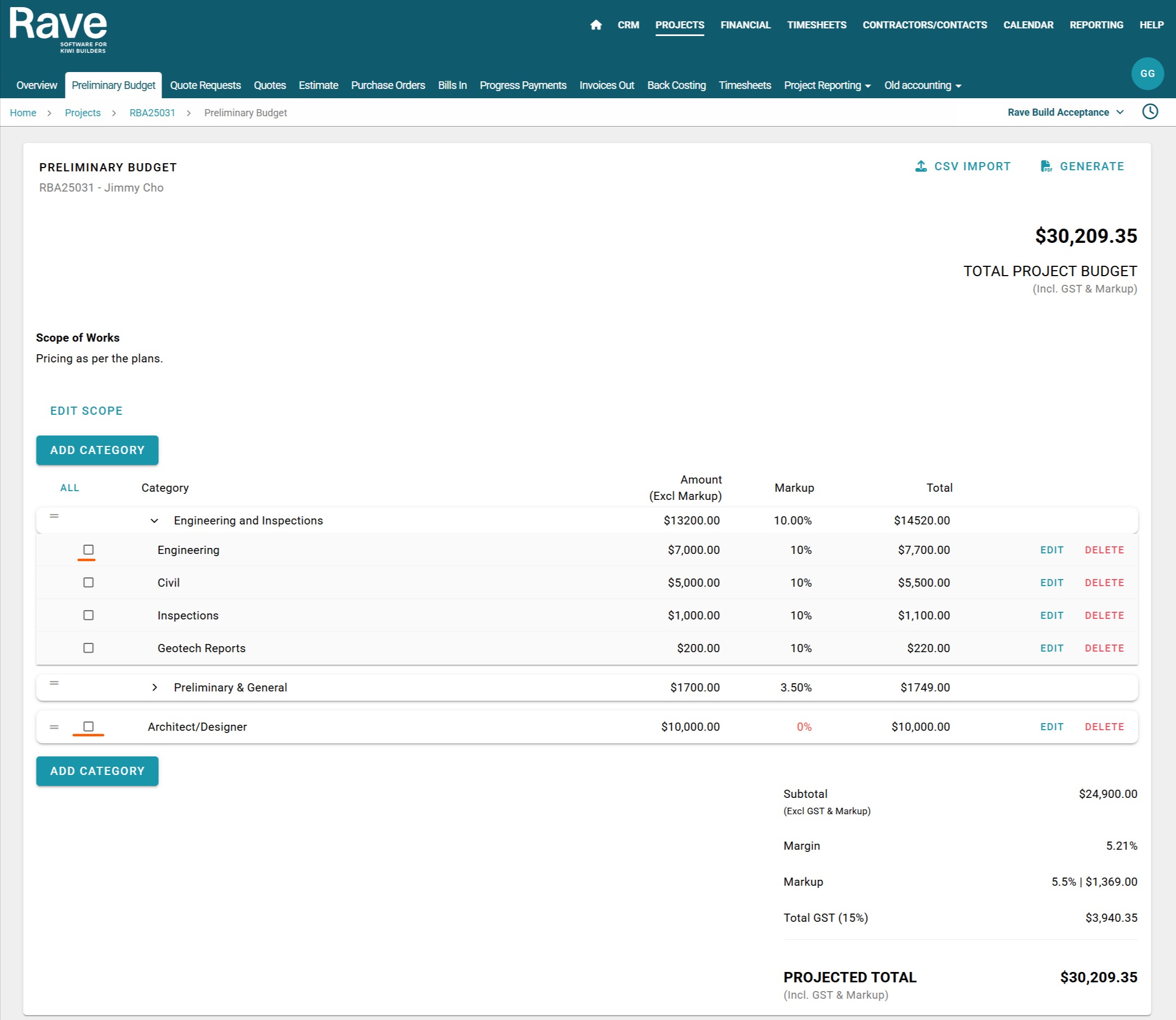
You can easily delete or add a markup % to multiple category or sub category lines by:
Single or multi select the Names via the check box to the left of each line.
This opens an action footer near the bottom of your screen
To delete the selected lines, click the red 'Delete' button
To add a markup % to the selected lines, add a value to the 'Markup %' field and click 'Apply'
To delete markup % to the select lines, clear out the markup % field and click apply
Note: If you have category level only the check box is beside the category name.
If you have subcategories the check box is beside the subcategory name.
Adding a Document Level Scope of Works to your Preliminary Budget
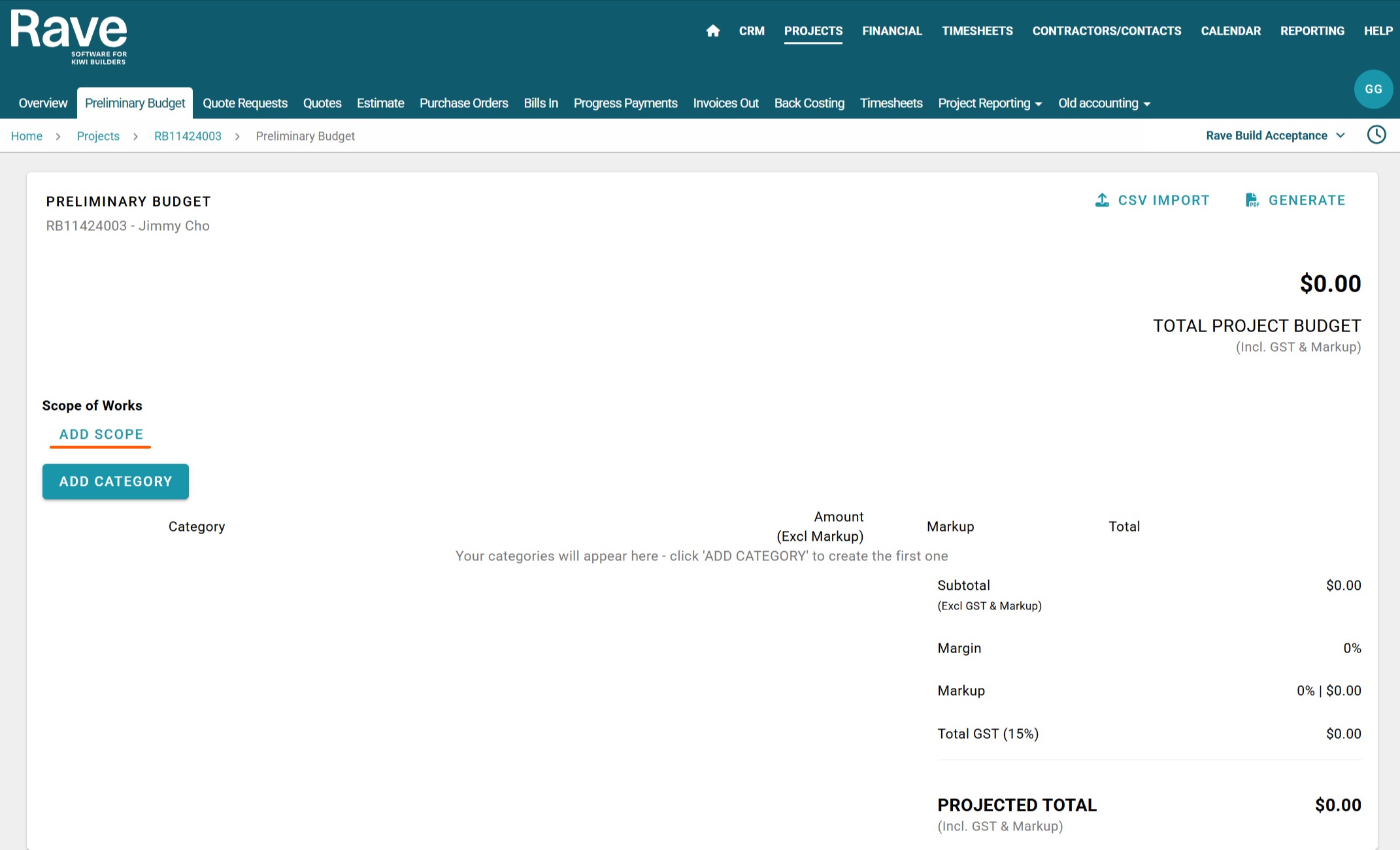
You can easily add a document level Scope of Works to your preliminary budget by clicking on the “Add Scope” text.
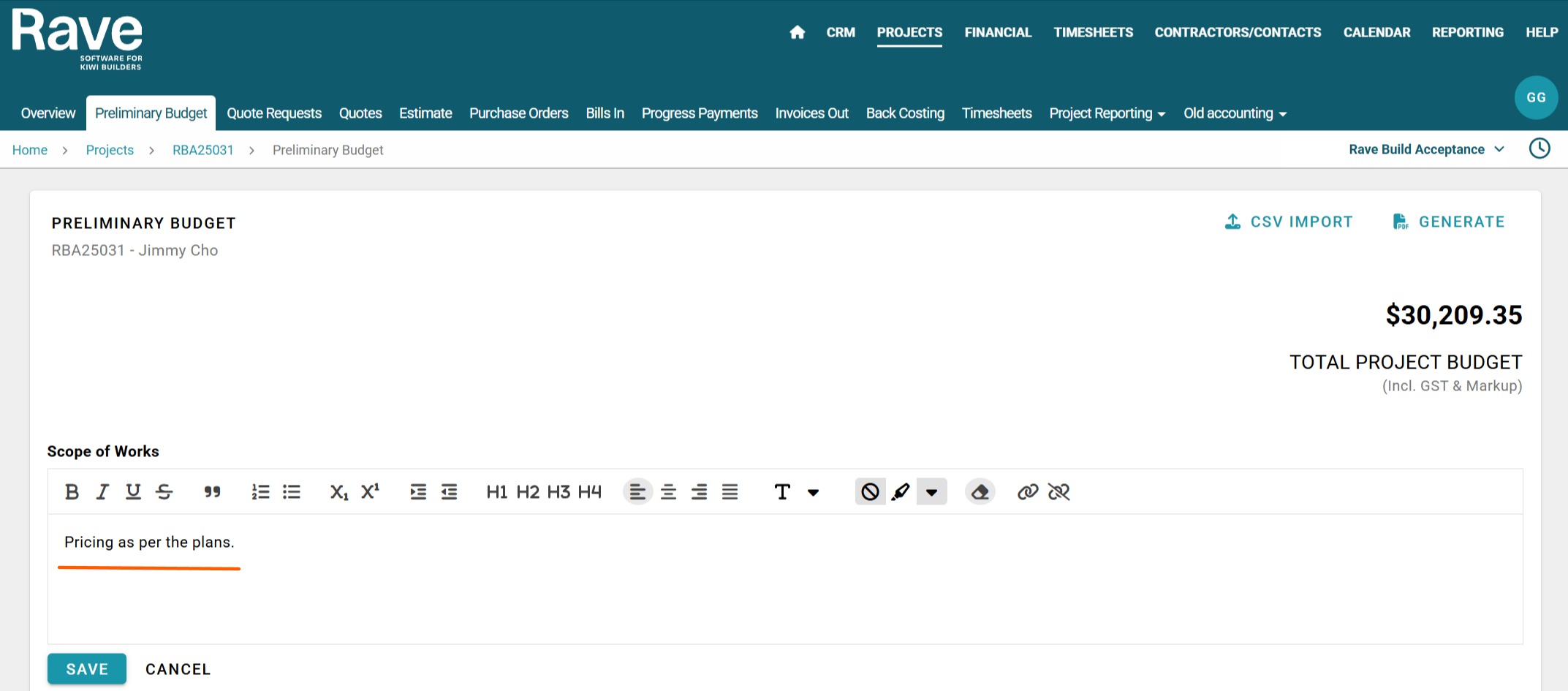
This will open a Scope of Works field where you can enter your desired text, with available formatting options.
To save your Scope of Works, click the “Save” button.
Once added the button will say Edit Scope for you to make changes.
To delete a scope of works client the Edit Scope button, delete/erase the text and Press Save.
Scope of Works by Category and Subcategory
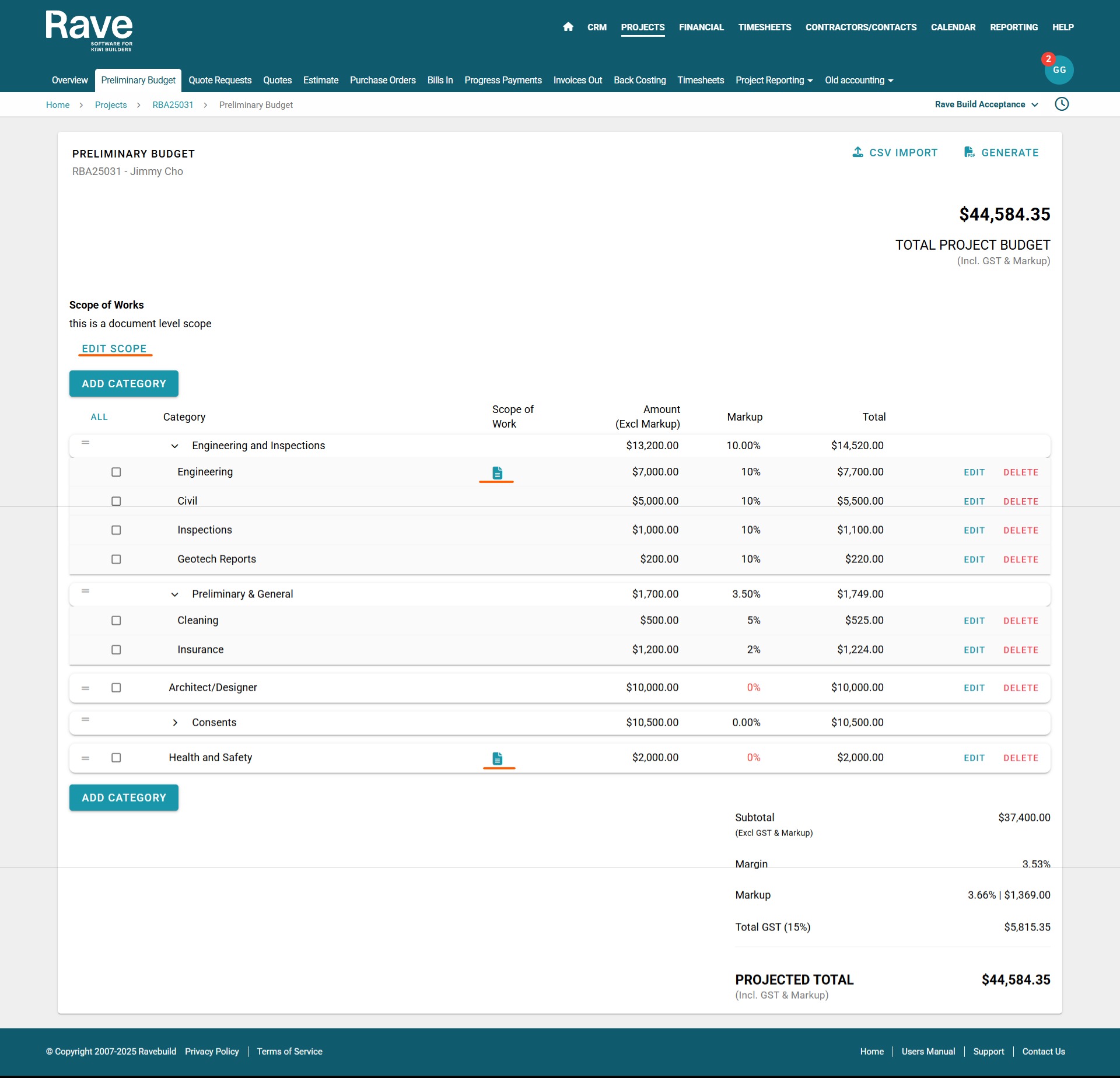
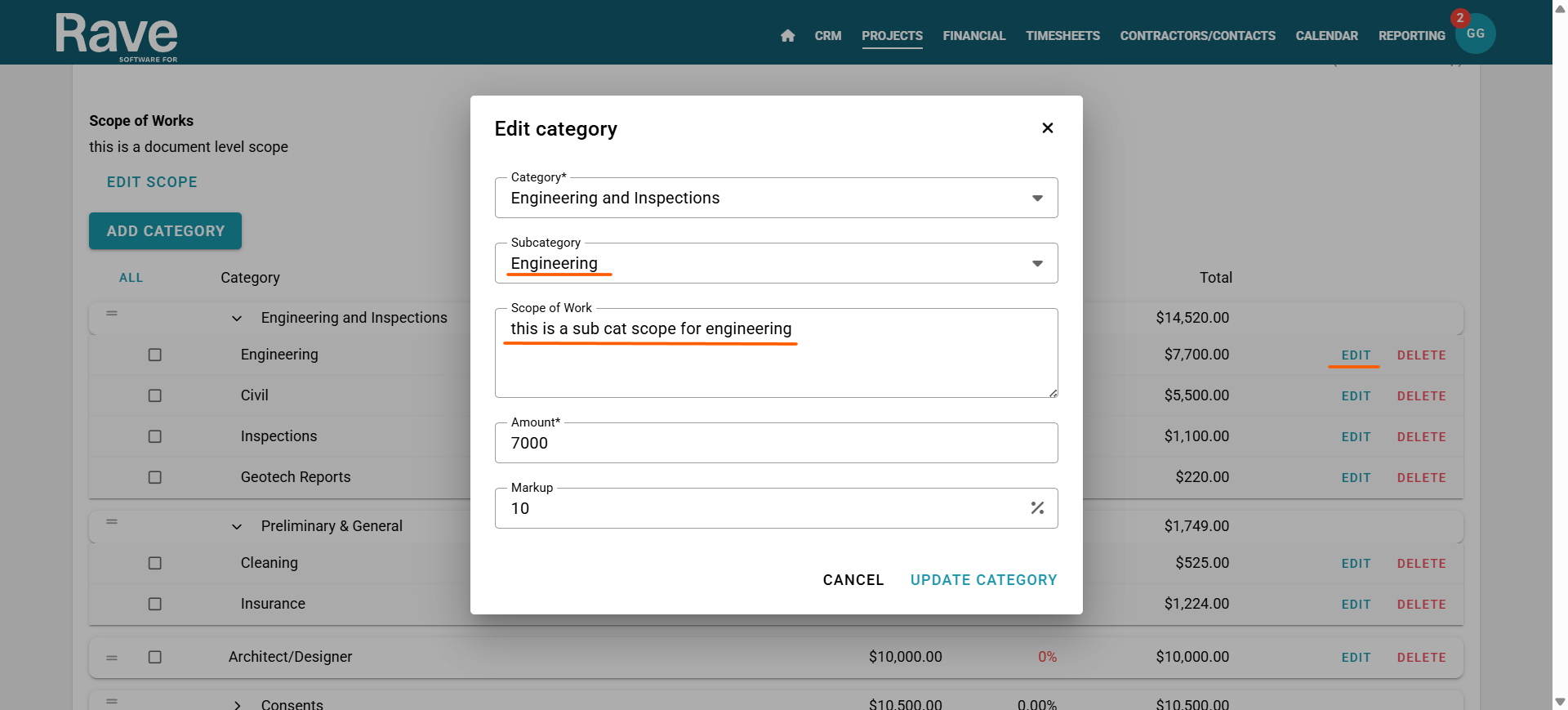
You can now add a Scope of Works at either the Category level or the Subcategory level as well as document level.
If your Category does not have any Subcategories, you can select the edit icon to add a Scope of Works for that Category.
Once you add Subcategories, you can define a Scope of Works for each Subcategory individually.
Note: You cannot have both a Category-level and Subcategory-level Scope of Works at the same time. If Subcategories exist, the Scope of Works must be defined at the Subcategory level only.
To Generate a Preliminary Budget proposal
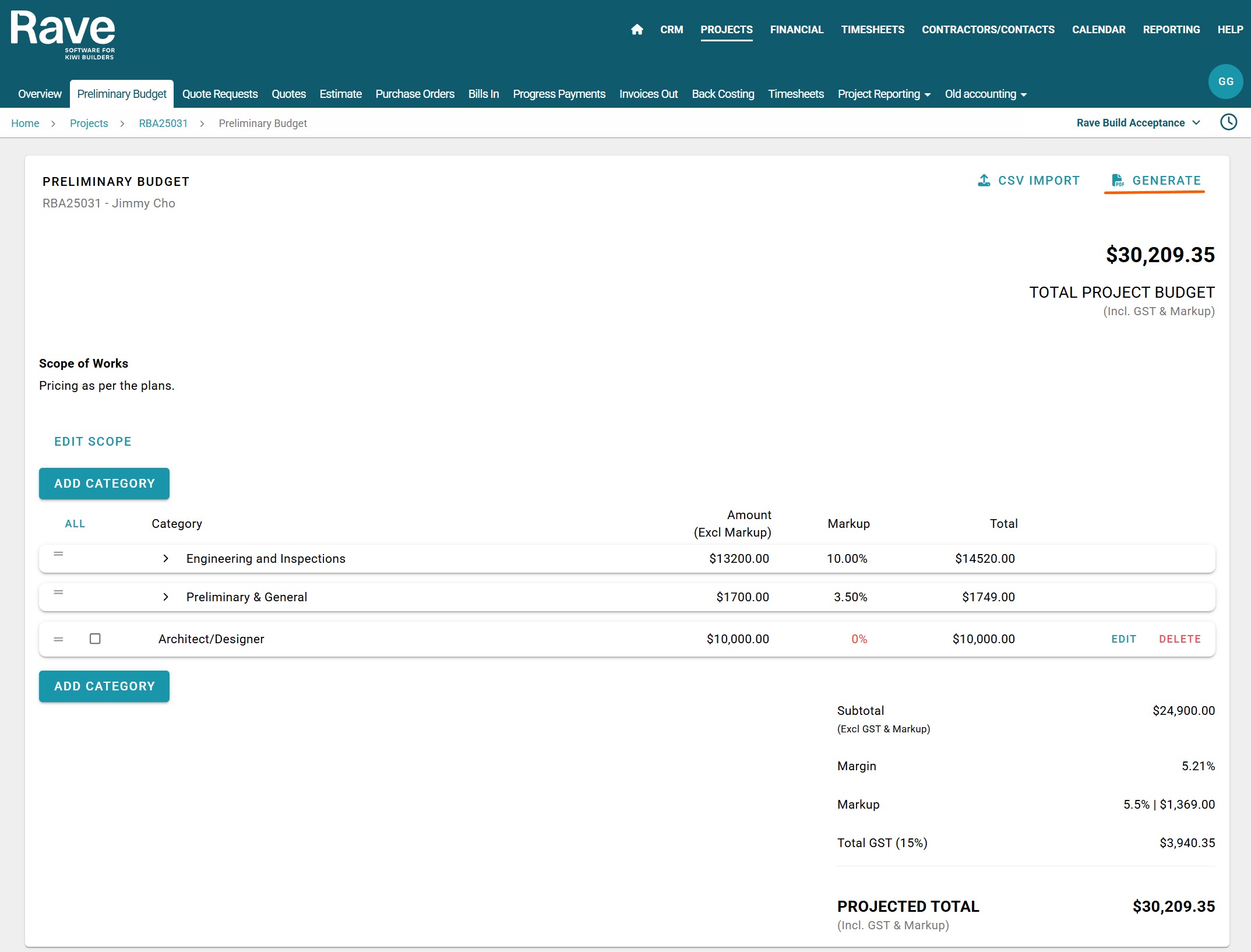
You can create a Preliminary Budget Proposal by clicking the Generate button located at the top right of the screen.
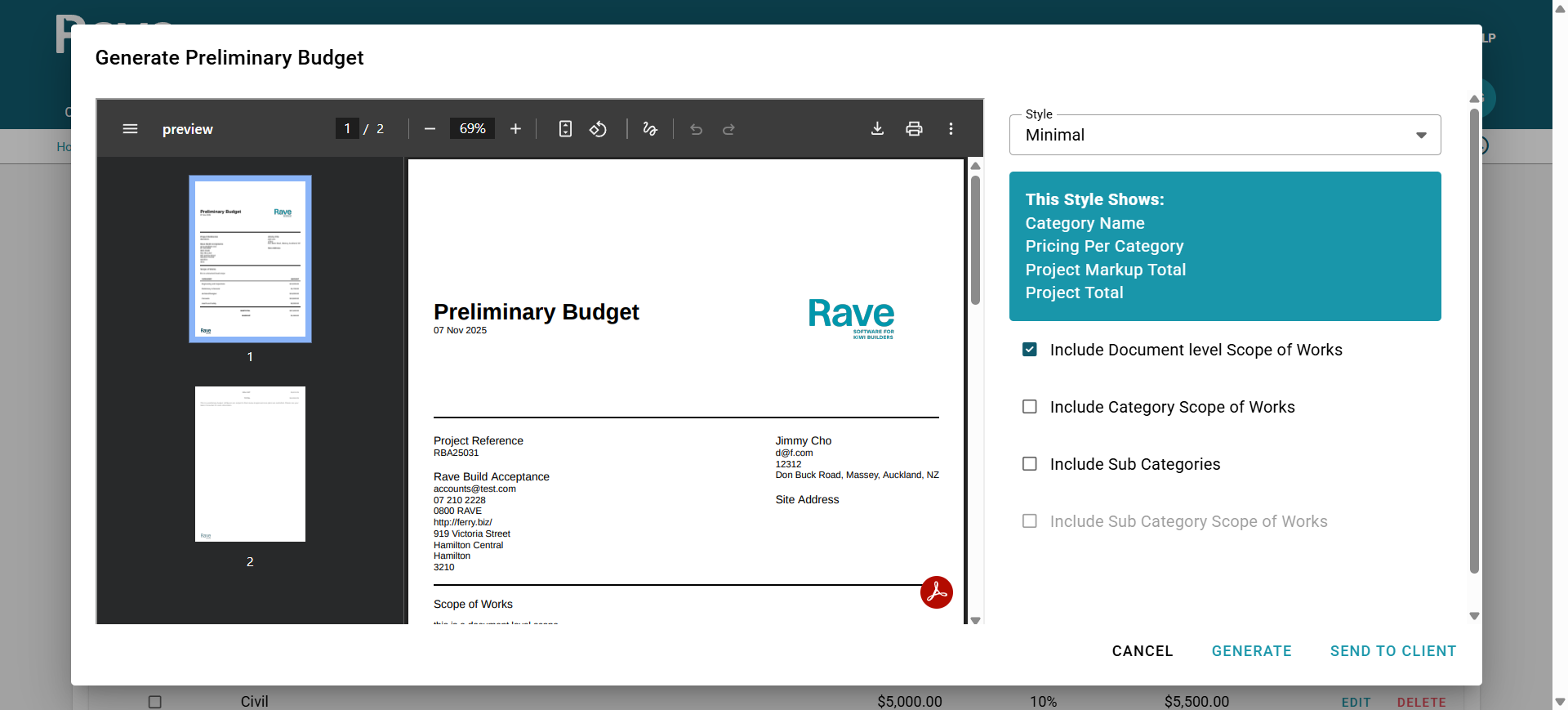
This action will open the Generate Preliminary Budget pop-up window, where you can configure your proposal settings.
There are four different proposal styles to choose from Minimal, Streamlined, Streamlined with Prices and Full. Each style explains what will show when you select them and your previews will changed based on the style selected.
You can also select whether to display:
The Document level Scope of Works, and/or
The Category Level Scope of Works and
Subcategories, with Scope of Works if either are in use within your budget setup.
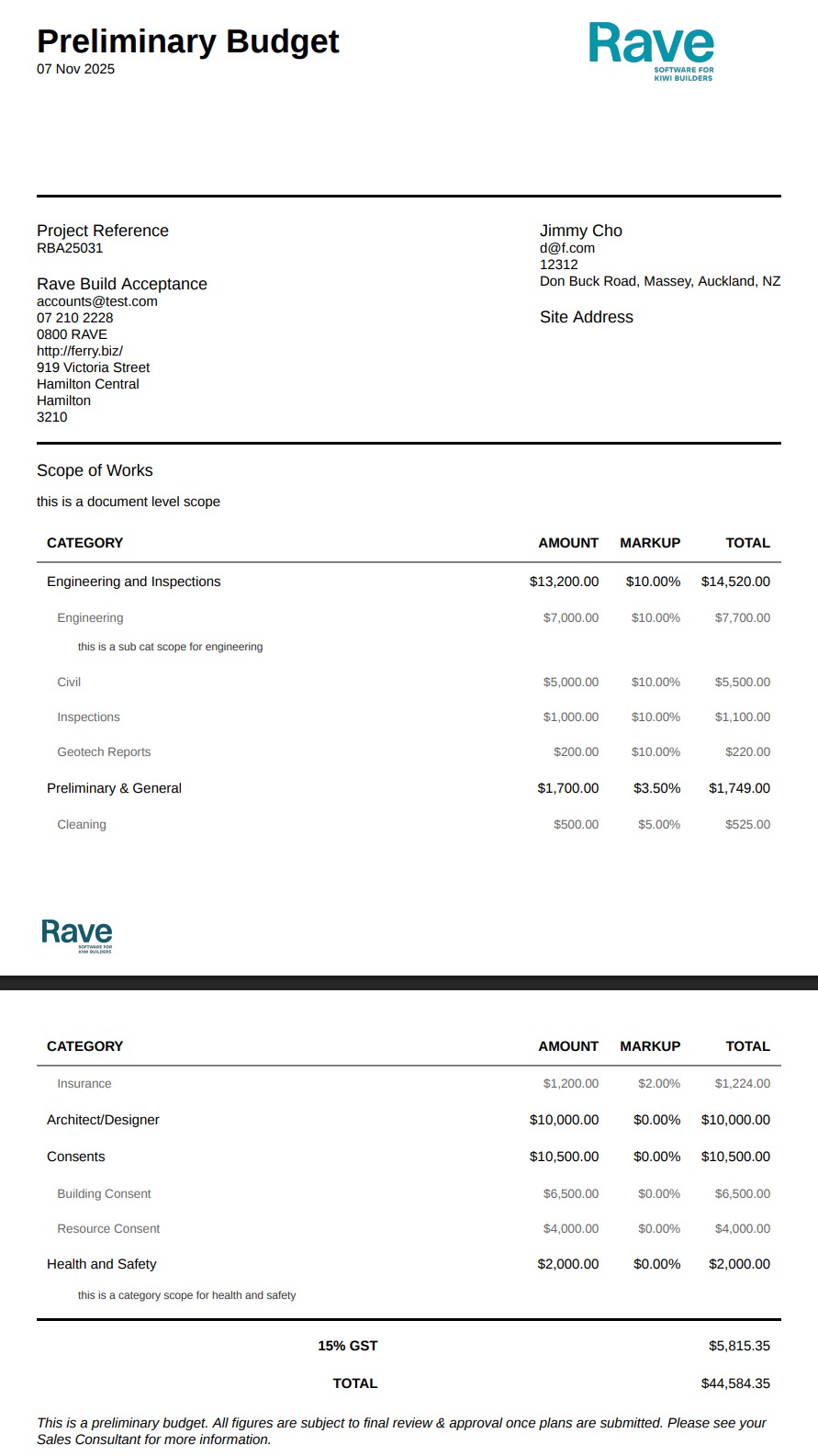
The preliminary budget preview includes:
The date and your logo at the top
Your Project Reference and business details
Your client’s details and site address if completed
Then Budget information based on your selected Style and check box decisions
A preliminary budget disclaimer
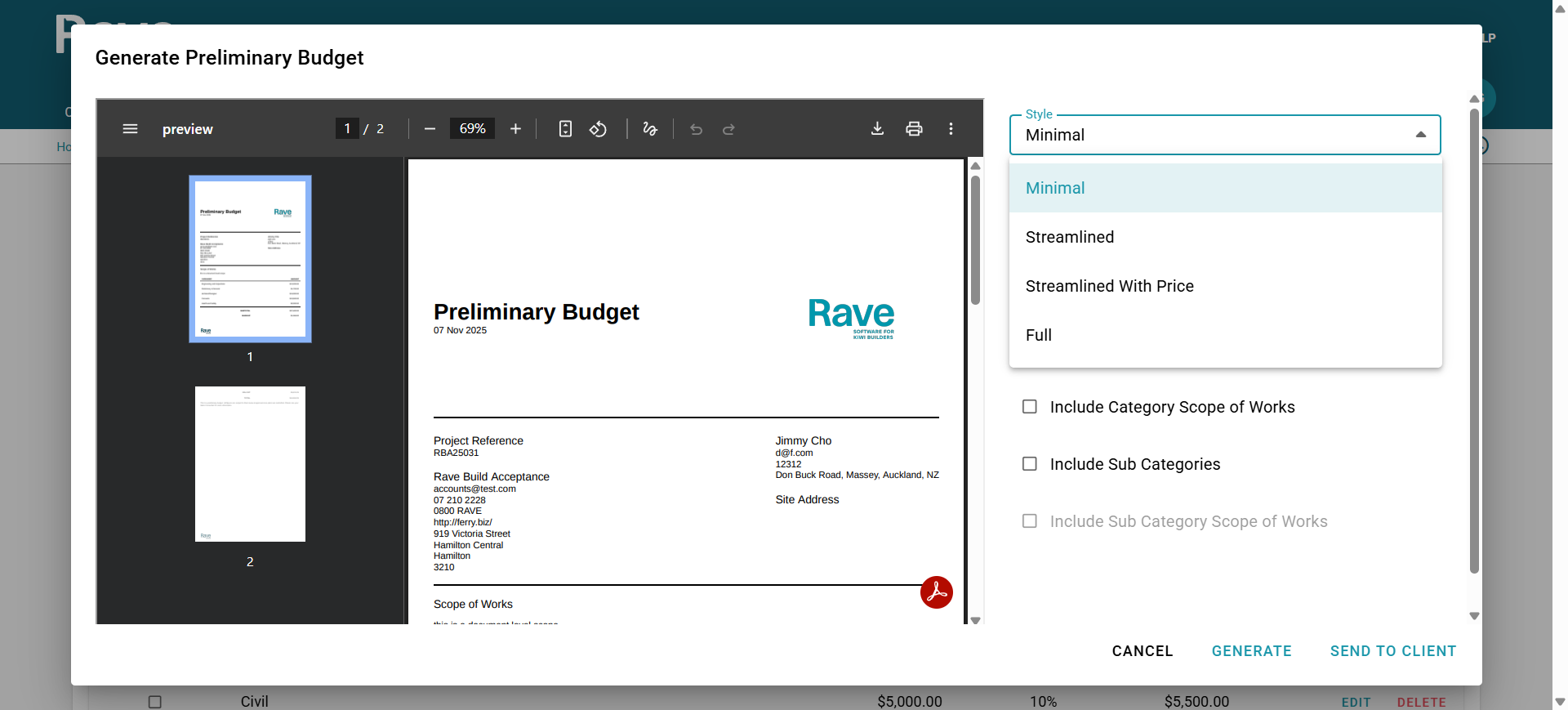
Rave provides you with 4 proposal style options - selectable via the proposal 'Style' dropdown
- The Minimal style - Displays each category header, Category Line Cost, a sub-total value, the markup dollar value, GST and Total price including GST
- The Streamlined style - Displays each category header and the Total price including GST only
- The Streamlined with Price style - Displays each category header, Category Line Cost, The total GST, and the Total price including GST
- The Full style - Displays each category header, each category line cost price, markup %, price including markup, with the total GST, and the Total price including GST
- If you choose to select to add Sub Categories and or scope of works these will also display depending on the proposal style.
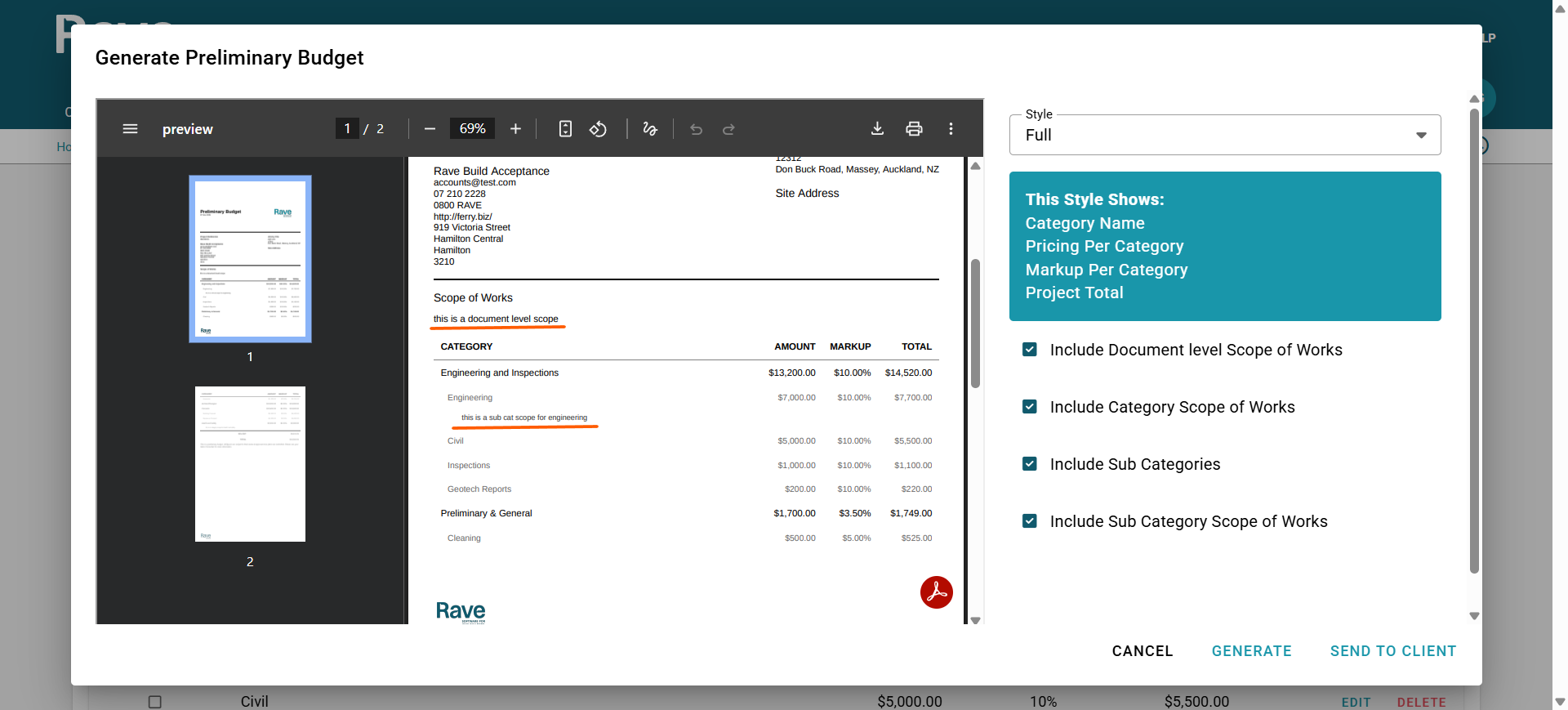
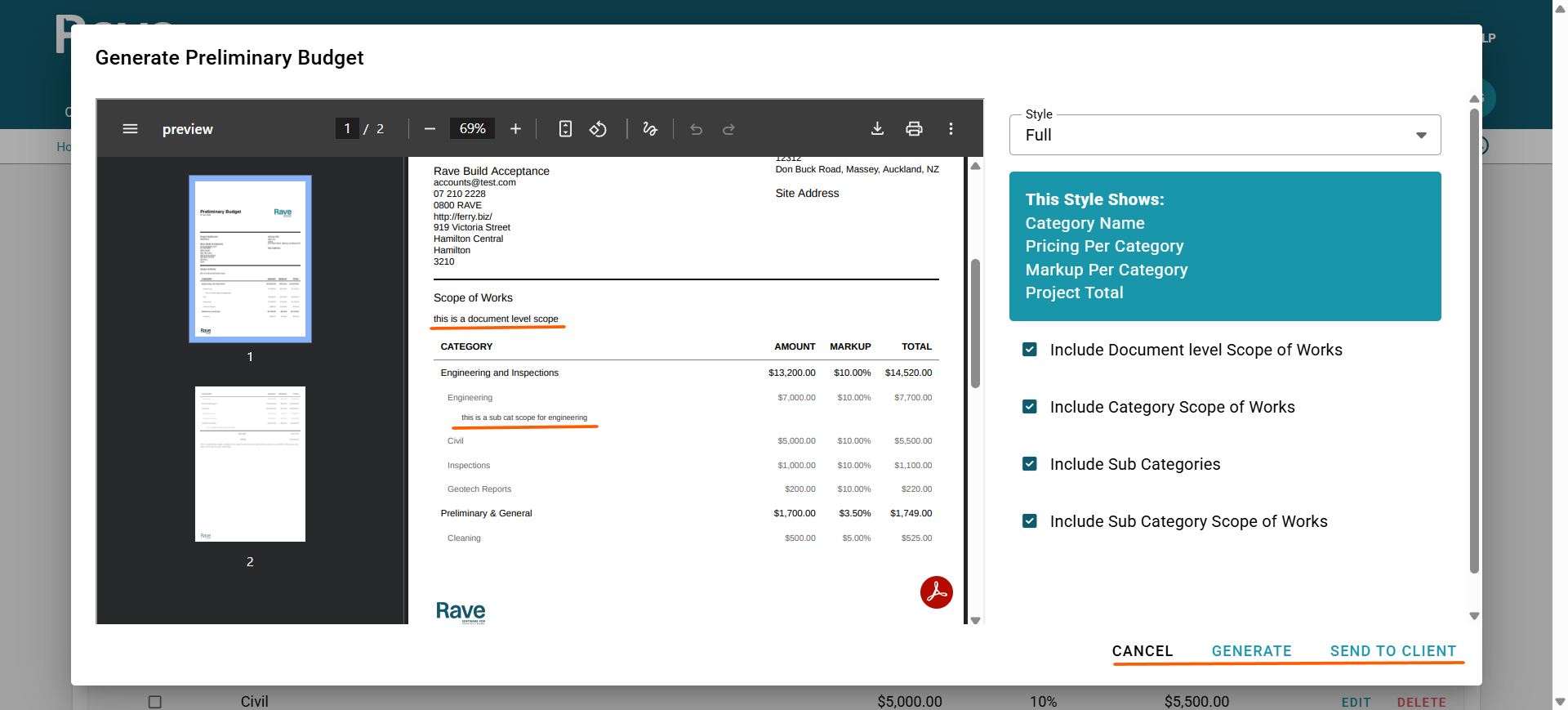
Generate your Preliminary Budget Proposal to Save/Print, or Send to your Client
Once you've included all required category lines and line details, have selected your proposal style, and have chosen whether to include your scope of works or not - you can generate a PDF version of your proposal to save/print, or have it sent directly to your client via their primary email address listed in their Rave client profile.
Reviewing your Preliminary Budget on the Back Costing sub-tab
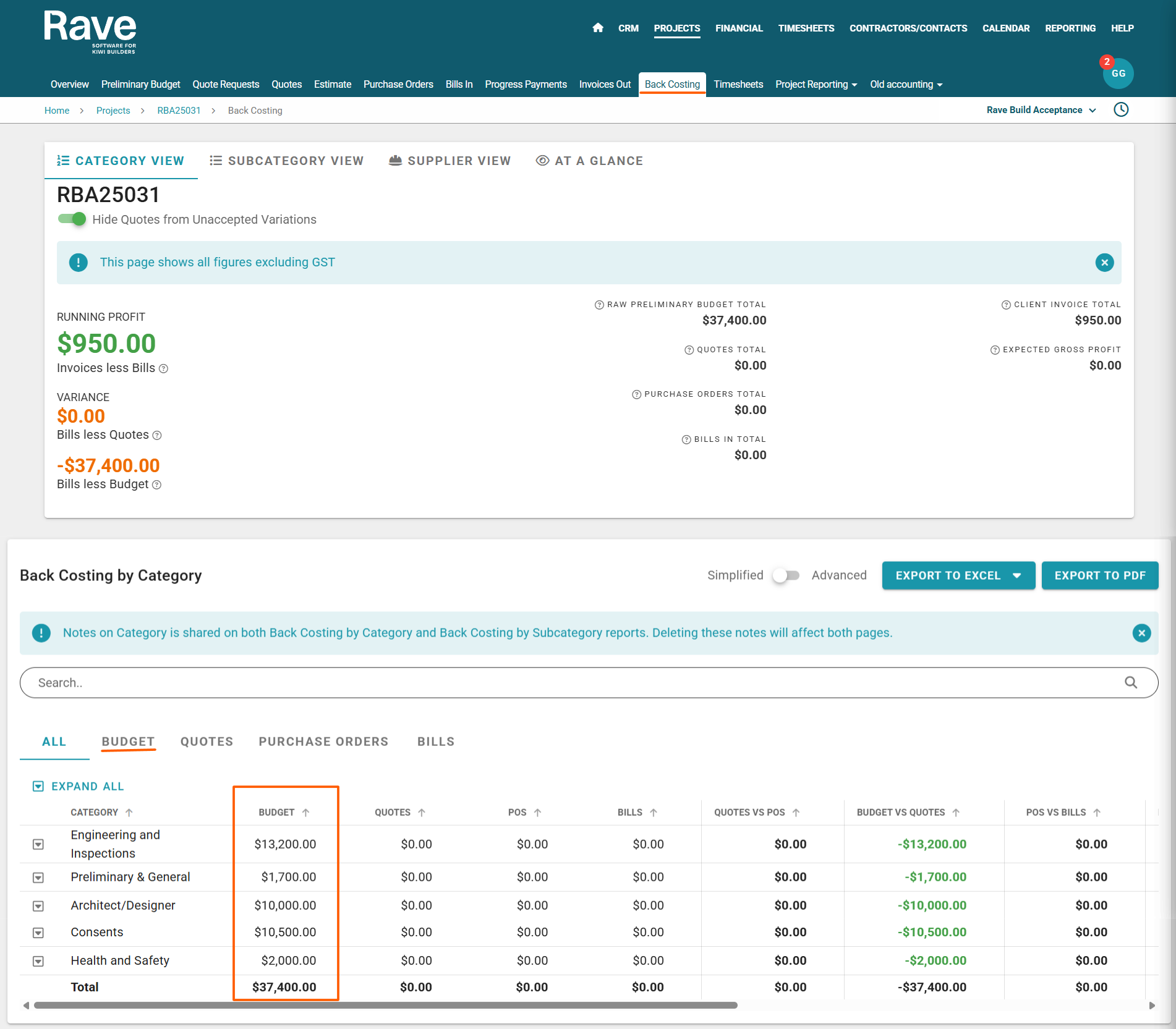
Moving over to the project’s “Back Costing” sub-tab, you will notice that the little “Budget” tab allows you to compare your preliminary budget with your actual quoted amount, and with what your purchase orders and bills totals are. As a result, it gives you a really good indication of how your original preliminary budget went versus what you actually ended up spending.
We dive deeper into the Back Costing reports in the Rave FMS Back Costing sub-tab section here.
Note: If you’ve deleted all of your preliminary budget categories, you’ll have no data to compare in the Back Costing report, and in this case, the Budget tab on this report will be greyed out.
Was this article helpful?
That’s Great!
Thank you for your feedback
Sorry! We couldn't be helpful
Thank you for your feedback
Feedback sent
We appreciate your effort and will try to fix the article